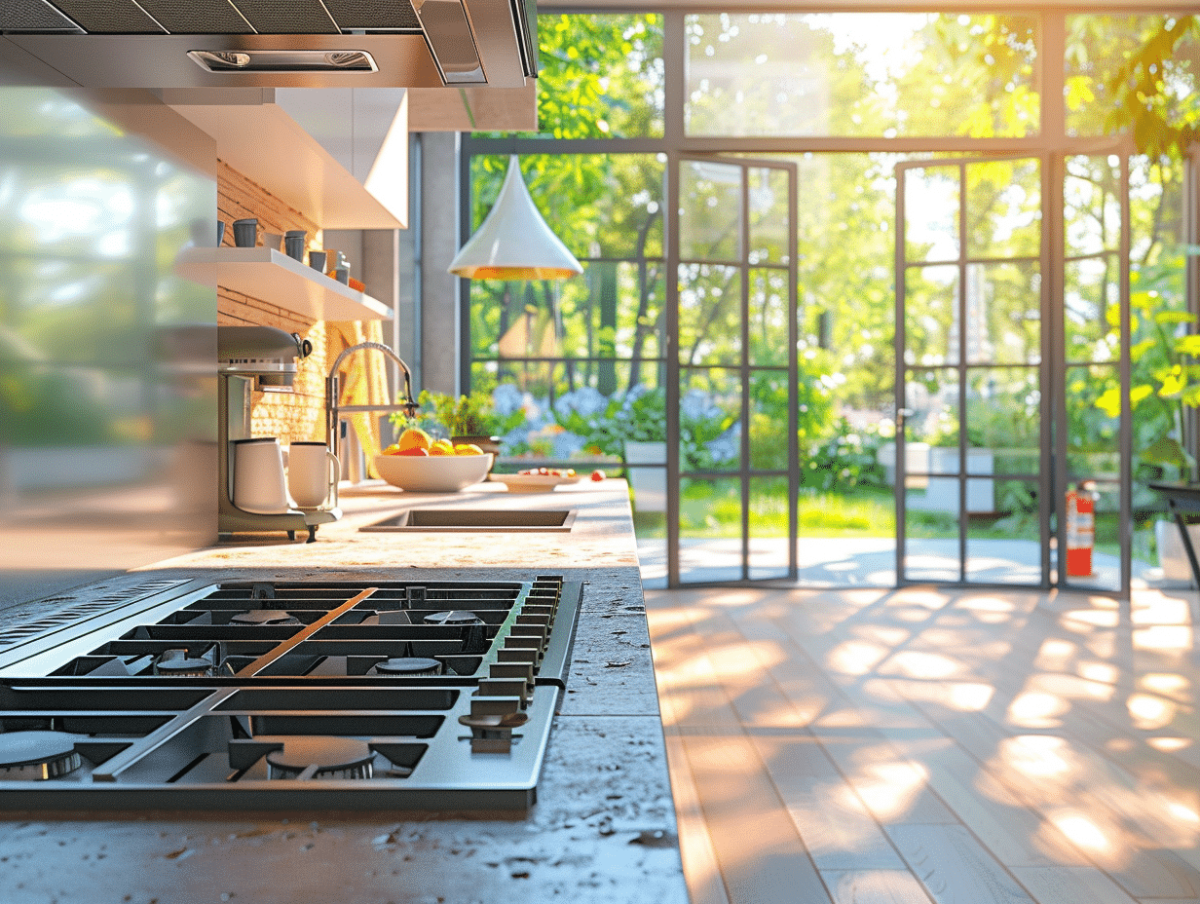
The layout of a kitchen requires special attention, both for practical reasons and safety. This room, the beating heart of the home, where meal preparation and moments of conviviality come together, must be designed to facilitate movement while minimizing the risk of accidents. From the strategic positioning of appliances to the choice of durable and easy-to-clean materials, and the installation of safety equipment, there are numerous details to consider in order to create a space that is both functional and safe. Simple tips can transform your kitchen into a place where efficiency goes hand in hand with serenity.
Space Optimization and Functionality in the Kitchen
The layout of a kitchen is a complex equation where each element must find its place with precision. The goal: to create a space where efficiency is maximized and movements are fluid. At the heart of this optimization, the concept of the activity triangle stands out as a reference. It is a layout designed around three key zones: the cooking zone, the storage zone, and the washing zone. This arrangement helps reduce movement and facilitates access to essential tools and ingredients during meal preparation.
The cooking zone, the pivot of culinary activity, should be arranged close to the necessary connections, such as gas and electricity, while ensuring optimal safety. The work surface should be positioned immediately nearby to provide a preparation area adjacent to the cooking plates. Regarding the storage zone, it includes the refrigerator and storage for food items and utensils. The distances between the oven and refrigerator should be considered to avoid unnecessary and risky movements with hot dishes.
The washing zone includes the sink and, if possible, the dishwasher. The placement of these elements should prioritize direct access from the cooking zone to facilitate the cleaning of utensils as they are used. Positioning the sink under a window provides beneficial natural light while making the task more pleasant.
The kitchen furniture must be chosen and placed with care. Their height and depth should be adapted to the user to avoid any physical strain. Tall cabinets, for example, should not be too high to ensure easy and safe access. To optimize space and functionality in the kitchen, each component must be considered both in its individuality and in its interaction with the rest of the work environment.

Safety and Standards for a Risk-Free Kitchen Layout
Safety in the layout of a kitchen is not improvised. It relies on strict standards and thoughtful design. Lighting is one of the major aspects, encompassing both natural brightness and electric lighting. Ensure uniform and glare-free lighting, especially in work areas where precision is essential. The installation of lighting systems under high cabinets or above the work surface contributes to a safe and functional atmosphere.
The layout of the kitchen must adapt to the specifics of each space. Linear, L-shaped, U-shaped, or featuring a central island, it should allow for easy and unobstructed circulation. Avoid narrow passages where the risk of accidents increases with the flow of activities. In open kitchens, the distinction between the preparation area and the dining room or eating nook should be clear to prevent any danger.
The height of the work surface should be adjusted for users to prevent back pain and accidents related to improper posture. High cabinets should also be placed at a reasonable height, allowing for easy and safe access, thus reducing the risk of objects falling.
Kitchen layout standards impose specific rules regarding safety distances, particularly around cooking appliances to avoid fire hazards. Be sure to adhere to these standards to ensure a secure space. The installation of equipment such as smoke detectors or fire extinguishers should be considered an essential complement to the overall safety of the kitchen.