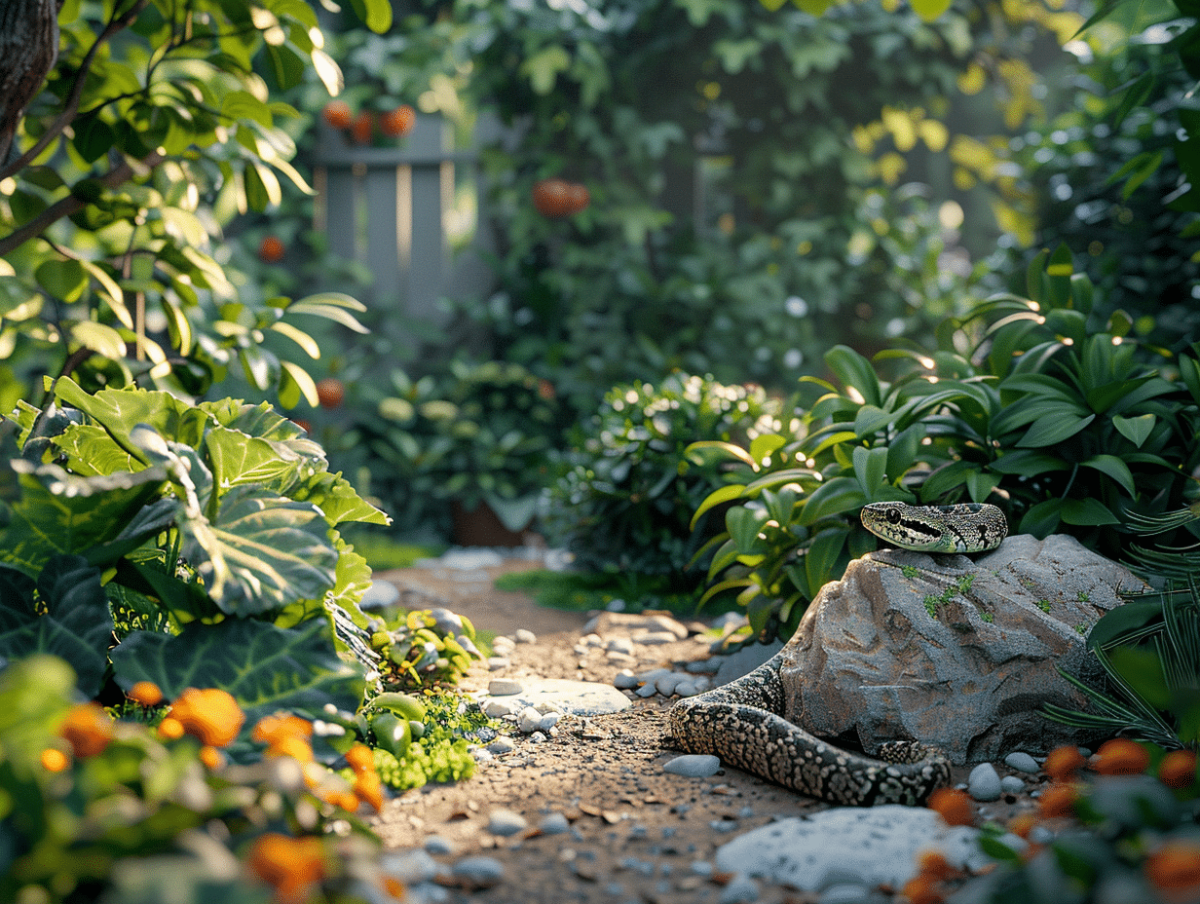
The presence of snakes in a garden can be a source of concern for many homeowners. However, these reptiles play an essential role in the ecosystem by regulating populations of rodents and insects. It’s important to be able to detect them to avoid unpleasant surprises and, above all, to take necessary measures if the species is potentially dangerous. Recognizing the warning signs of snake presence, such as shed skins, serpentine tracks in the dust or loose soil, or unusual piles of leaves or debris, can be fundamental for the safety of the home’s inhabitants.
Recognizing the presence of snakes: signs and clues
The tracks left by snakes are often the first clue of their presence in your garden. These can manifest as winding paths on the ground, particularly in dusty or sandy areas, where the passage of the animal is discreet yet certain. It is not uncommon to also find skins, remnants of their shedding – a natural phenomenon occurring approximately every two months. These exuviae, transparent and intact, are often found near the animal’s resting places, such as under rocks or within dense vegetation.
The identification of snake droppings is another key element in detecting their presence. These droppings, although less common than those of other animals due to the reptile’s infrequent feeding, can be identified by their elongated shape and the possible presence of bone fragments or scales, indicating their carnivorous diet that includes rodents, birds, and frogs. Fewer rodents observed nearby can also be an indicator, as snakes naturally regulate these populations.
Regarding sounds and smells, the presence of snakes is generally more discreet than that of other animals. An unusual hiss or rustling in the grass may alert you to the presence of a snake, which, although peaceful, can produce sounds when it feels threatened or disturbed by human presence. As for smells, these are less perceptible, except in cases of high concentration or when their habitat is directly disturbed.
Holes and potential shelters are true havens for snakes, which appreciate old rodent nests or piles of leaves to hide or live in. A careful examination of the surroundings of the house and garden structures, such as wood piles or stones, can reveal discreet entrances leading to these refuges. It’s important to know the local species, whether venomous or not, to properly assess the risk and the need for preventive or intervention measures. So take the time to observe and learn about these often misunderstood creatures, but essential to the balance of our ecosystem.
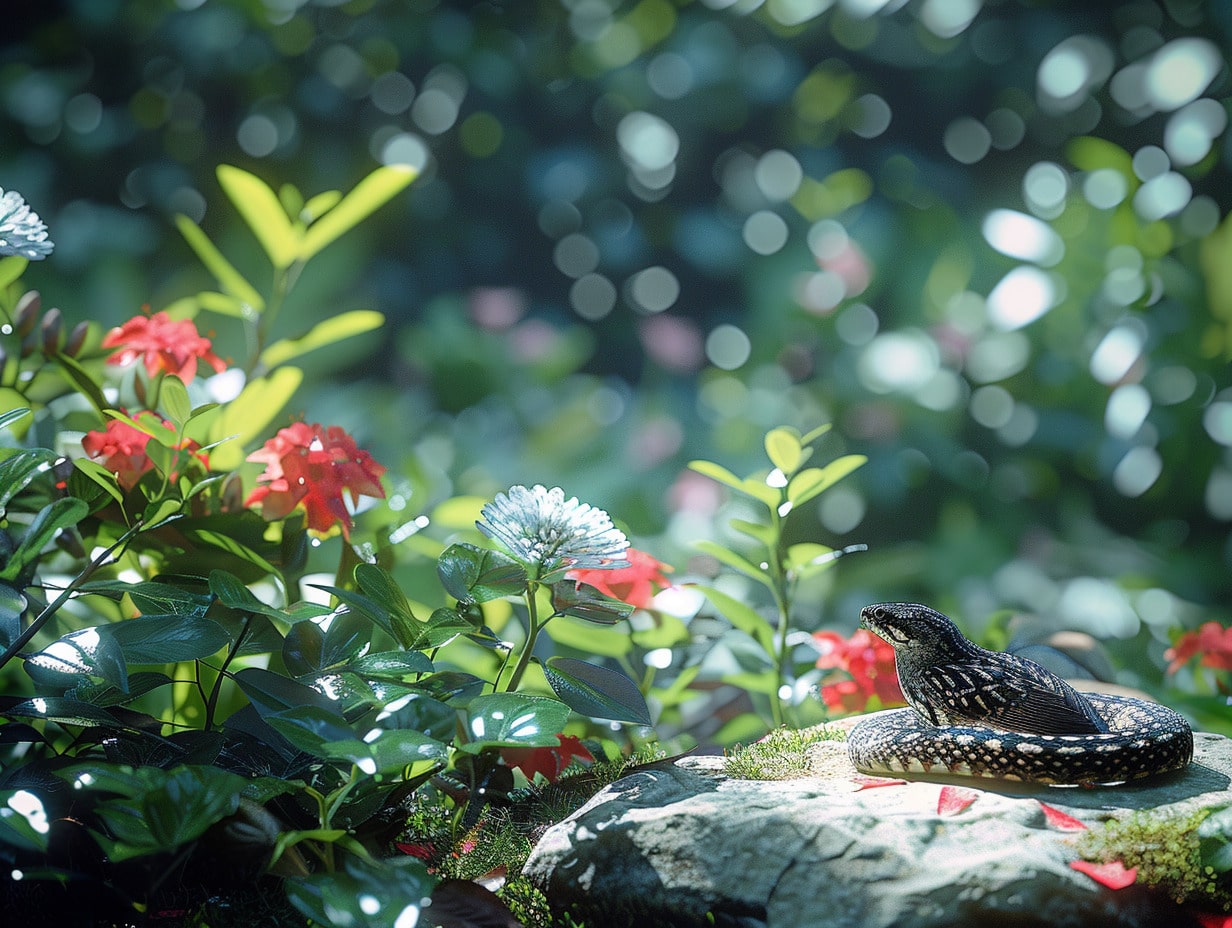
Preventing the appearance of snakes: tips and measures
To reduce the likelihood of encounters with snakes in your garden, some preventive measures are necessary. Sealing the spaces under the house is an effective action, as these gaps represent ideal entry points for these reptiles seeking coolness or food. Carefully check the foundations and seal any openings that could allow them to pass.
Keeping your yard clean and clear is also fundamental. Snakes favor cluttered places that offer many hiding spots. Therefore, eliminate wood piles, leaf piles, and other debris where they could hide. Keep the grass short and move hedges and bushes away from pathways to limit potential hiding places.
The presence of food attracts snakes just as much as the prey they hunt. Eliminate food scraps, stagnant water sources, and control rodent populations to discourage them from settling. Repellents and traps can be used to repel or capture snakes, but their effectiveness varies and they do not replace good hygiene and land prevention.
Knowledge and respect for these animals contribute to harmonious coexistence. Snakes are an integral part of our ecosystem and are often protected by strict laws. If in doubt about the danger of a specimen or for safe intervention, contact trained professionals rather than attempting to capture or remove it yourself.